Theorem 3: The Late-Game Timeout
Claim
When trailing by up to three points (or tied), is calling a timeout better than playing on with 20--50 seconds remaining?
How We Measure It
We filter the historical play-by-play log for situations where:
- Either the home or away team has possession
- That team is trailing by up to 3 points, or tied
- Between 20 and 50 seconds remain
We group possessions by:
- Timeout: The team stops play with a timeout call.
- Play On: The team's first action is a shot or turnover.
Other first actions are excluded. We calculate the possessing team's historical win percentage and save observation counts and pointwise 95% uncertainty intervals for each group. Each interval uses the wider limits from a game-cluster bootstrap and Wilson/Newcombe finite-sample bounds. Games are resampled as blocks so repeated clock values and overtime periods from one game remain together. This is descriptive: timeout availability, team quality, and why a coach stopped play are not controlled for.
Results
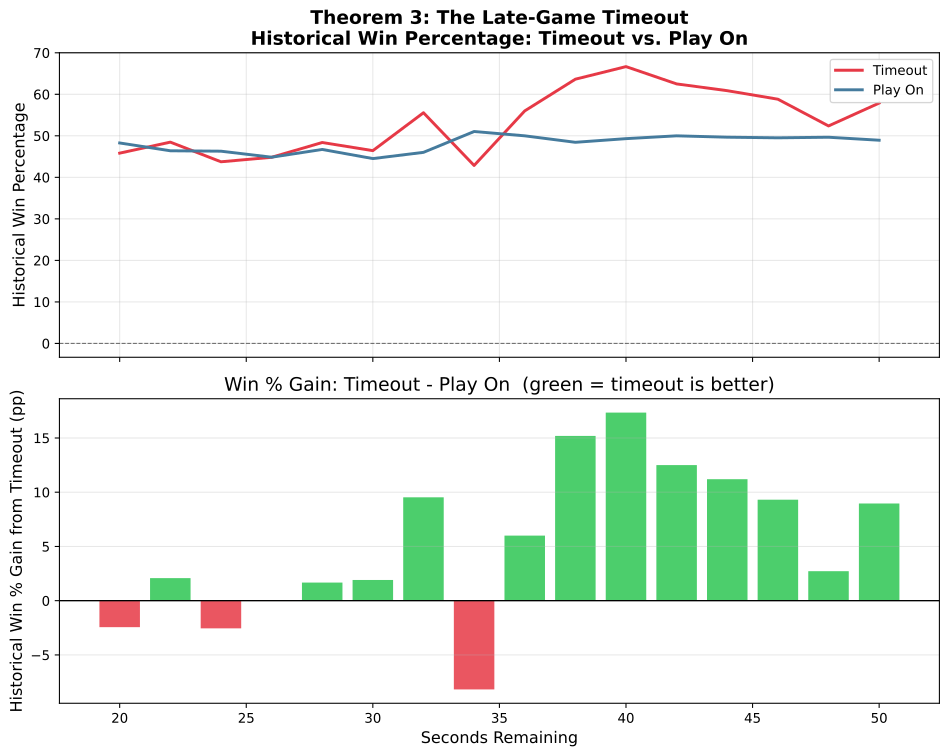
Conclusion
Calling timeout had the higher observed win rate at 11 of 16 comparable clock points. The 95% interval excluded zero in favor of timeout at 0 points. This association does not show that the timeout itself caused the difference.