Theorem 2: Foul Up 3
Claim
When leading by three with fewer than 12 seconds left, is intentionally fouling better than defending normally?
How We Measure It
For both home and away teams, we select situations where the leading team is up exactly three and the trailing team has the ball. A sample is retained when the first logged action after the target clock is:
- Foul: The leading team commits the foul.
- Defend: The trailing offense shoots or turns the ball over before a foul.
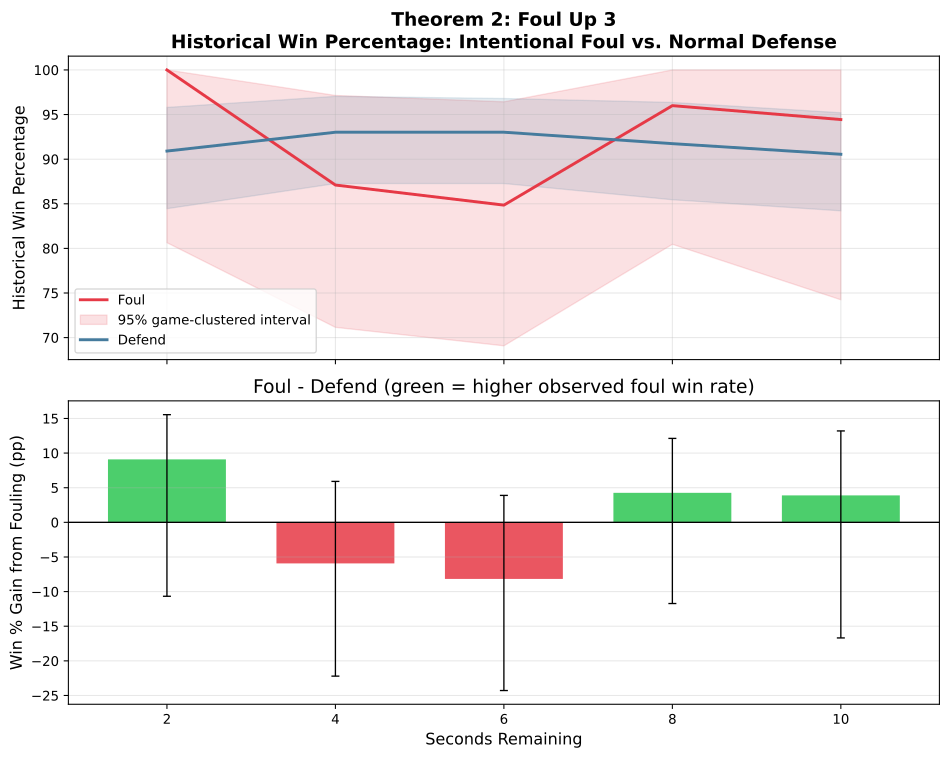
Empty groups remain missing rather than being assigned a 50% win rate. The saved data include observation counts and pointwise 95% uncertainty intervals. Each interval uses the wider limits from a game-cluster bootstrap and Wilson/Newcombe finite-sample bounds. Resampling games as blocks keeps repeated clock values and overtime periods from the same game together. This is a descriptive comparison and does not adjust for why coaches chose to foul.
Results
Conclusion
Fouling had the higher observed win rate at 3 of 5 comparable clock points. The 95% interval excluded zero in favor of fouling at 0 points. Sample sizes are small, so the data do not establish that fouling causes better outcomes.